ZEOMIC Inorganic Silver-Based Antibacterial Agent
Commercialized by Sinanen Zeomic in 1984, Zeomic was the world’s first silver-based inorganic antibacterial agent. Compared with organic antibacterial agents, Zeomic offers significant advantages, including high safety, durability, and outstanding heat resistance. In recent years, its functions have expanded beyond antibacterial protection to applications such as deodorizing and water treatment. Highly regarded both in Japan and worldwide, Zeomic has established a leading position as a global multifunctional additive.
High Safety, Approvals, and Certifications
Comprehensive safety data and a wide range of certifications and approvals are available.
Outstanding Heat Resistance
It does not decompose even at resin-processing temperatures.
Excellent Durability
It is not leached by organic solvents and provides long-lasting antibacterial activity.
Zeomic Antibacterial Mechanism
Zeomic exerts its antibacterial effect by inhibiting enzyme function in the microbial metabolic system. Its silver ions rapidly penetrate the surface of microorganisms and are taken up into the cells through active transport.

Once inside the cell, the silver ions react with multiple essential metabolic enzymes and deactivate them, disrupting microbial growth and reproduction at successive stages.
Zeomic Antibacterial Performance
Effective against a broad range of bacteria and molds
Through the action of its silver ions, Zeomic demonstrates antibacterial activity against a broad range of microorganisms, including Gram-negative bacteria such as Escherichia coli and Pseudomonas aeruginosa; Gram-positive bacteria such as Staphylococcus aureus and MRSA; and molds such as Aspergillus niger and Penicillium. In Zeomic resistance-development tests involving repeated subculturing of Staphylococcus aureus, methicillin-resistant Staphylococcus aureus, and Pseudomonas aeruginosa, the minimum inhibitory concentration remained virtually unchanged.
Minimum Inhibitory Concentration (MIC) of Zeomic: Bacteria
| Test Strain | MIC(ppm) |
|---|---|
| Bacillus cereus var. mycoides ATCC 11778 (spores) | 125 |
| Bacillus subtilis ATCC 6633 (spores) | 250 |
| Vibrio parahaemolyticus IFO 12711 | 62.5 |
| Salmonella gallinarum gallinarum IFO 3163 | 125 |
| Enterobacter aerogenes IFO 13534 | 125 |
| Escherichia coli IFO 3301 | 62.5 |
| Pseudomonas aeruginosa IID P-1 | 62.5 |
| Staphylococcus aureus ATCC 6538P | 250 |
| Streptococcus faecalis ATCC 8043 | 125 |
| Lactobacillus casei ATCC 7468 | 250 |
Minimum Inhibitory Concentration (MIC) of Zeomic: Yeasts
| Test Strain | MIC(ppm) |
|---|---|
| Rhodotorula glutinis IFO 1125 | 500 |
| Candida albicans IFO 1594 | 250 |
| Saccharomyces cerevisiae IFO 1950 | 250 |
Minimum Inhibitory Concentration (MIC) of Zeomic: Molds
| Test Strain | MIC(ppm) |
|---|---|
| Aspergillus niger IFO 4407 | 500 |
| Aureobasidium pullulans IFO 6353 | 500 |
| Chaetomium globosum ATCC 6205 | 500 |
| Gliocladium virens IFO 6355 | 500 |
| Penicillium funiculosum IFO 6345 | 500 |
| Micrococcus flavus ATCC 10240 | 500 |
| Cladosporium herbarum IFO 4495 | 500 |
| Penicillium citrinum IFO 7784 | 500 |
| Alternaria alternata IFO 31188 | 500 |
| Fusarium moniliforme NHL F-616 | 500 |
Zeomic Resistance-Development Test Results: MIC Measurements (Concentration Unit: ppm)
| Test Cycle | Staphylococcus aureus | MRSA | Pseudomonas aeruginosa |
|---|---|---|---|
| 1 | 250 | 500 | 200 |
| 2 | 500 | 500 | 200 |
| 3 | 250 | 250 | 100 |
| 4 | 250 | 250 | 200 |
| 5 | 250 | 250 | 100 |
| 6 | 250 | 250 | 100 |
| 7 | 250 | 250 | 100 |
| 8 | 250 | 250 | 200 |
| 9 | 250 | 250 | 100 |
| 10 | 250 | 250 | 200 |
Zeomic Antibacterial Test Examples
PE Film
No. 1: Control
No. 2: Contains 0.5% Zeomic
Test Method:Evaluated in accordance with JIS Z 2801 (2000 edition)
| Sample | Staphylococcus aureus | Escherichia coli | ||
|---|---|---|---|---|
| Bacterial Count | Antibacterial Activity Value | Bacterial Count | Antibacterial Activity Value | |
| 1 | 4.7E4 | — | 9.3E6 | — |
| 2 | <10 | 3.7 or higher | <10 | 6.0 or higher |
| In the table, "E" denotes an exponent (example: 1.0E5 = 1.0 × 10⁵) | ||||
Powder Coating
No. 1: Control
No. 2: Contains 1% Zeomic
Test Method:Evaluated in accordance with JIS Z 2801 (2000 edition)
| Sample | Staphylococcus aureus | Escherichia coli | ||
|---|---|---|---|---|
| Bacterial Count | Antibacterial Activity Value | Bacterial Count | Antibacterial Activity Value | |
| 1 | 7.1E5 | — | 5.0E6 | — |
| 2 | <10 | 4.9 or higher | <10 | 4.7 or higher |
| In the table, "E" denotes an exponent (example: 1.0E5 = 1.0 × 10⁵) | ||||
Applications
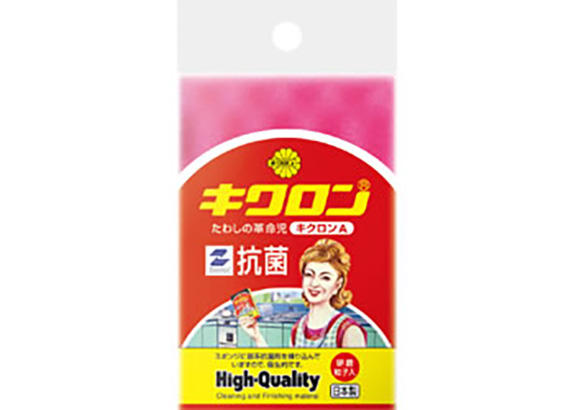
Antibacterial Scouring Sponge (Kikulon Co., Ltd.)
Zeomic is used in scouring sponges that combine cleaning and polishing functions. Because these sponges come into contact with moisture every day and are susceptible to microbial growth, Kikulon Co., Ltd. has used Zeomic for many years to help keep them hygienic.
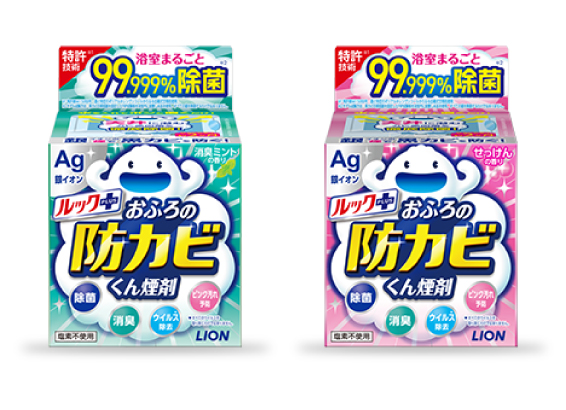
Antifungal Fumigant (Lion Corporation)
Mold should be prevented by eliminating the causative organisms before growth begins, rather than removed only after it appears. In bathrooms, organisms hidden on the ceiling release spores that spread throughout the room, leading to mold growth on floors and walls. This antifungal fumigant uses smoke containing Zeomic silver ions to eliminate organisms hidden throughout the bathroom and help prevent black mold.
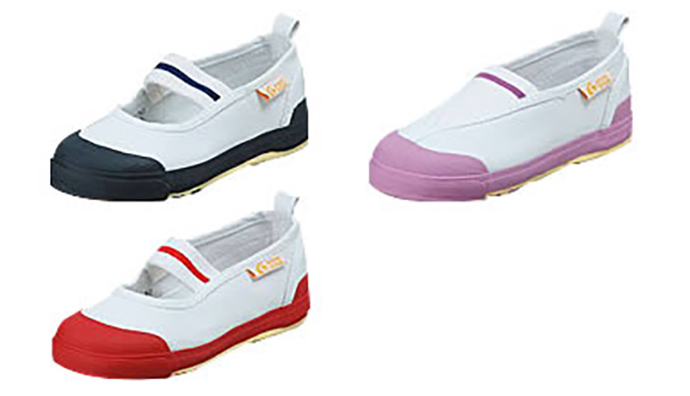
Antibacterial School Shoes (MoonStar Company)
Used in MoonStar CR ST11 and CR ST12 antibacterial school shoes.
Work Gloves for the Food Industry (FP CHUPA CORPORATION)
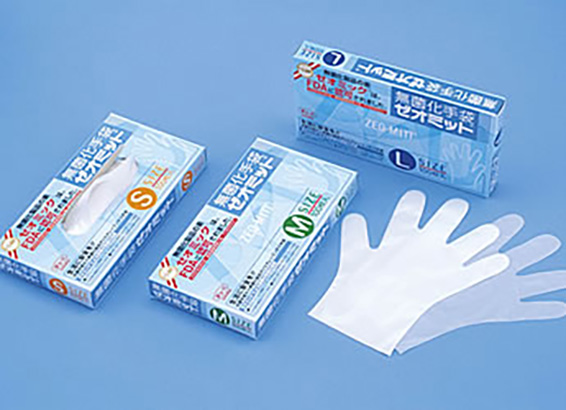
Zeomic is widely used in work gloves designed primarily for the food industry, supporting the safe and reliable handling of food.