


Microkiller® TAG100 Next-Generation Photocatalyst
Microkiller® TAG100, a next-generation Japanese photocatalyst (hereinafter “TAG100”), is suitable for a wide range of indoor applications and effectively purifies indoor air.
Characteristics
• Highly reactive under visible indoor light, providing antibacterial, deodorizing, and air-purification effects
• Contains silver ions and a high-capacity adsorbent, allowing deodorizing performance to continue at night without light
• Suitable not only for indoor treatment but also for coating exterior walls with limited light exposure
Safety
TAG100 is a mixture of titanium dioxide and pure water. It is highly safe for people and animals, nonflammable, and environmentally friendly.
Oral toxicity testing indicated no harmful effects on humans or animals:
Japan Food Research Laboratories: Acute Oral Toxicity Test in Rats
| Group | Before Test | After Test | |
|---|---|---|---|
| 7 Days | 14 Days | ||
| Test Group | 125±2.6(5) | 158±5.1(5) | 175.7±4.6(5) |
| Control Group | 123.3±4.6(5) | 158±6.5(5) | 178.7±5.1(5)6.8 |
Antibacterial Performance
TAG100 decomposes and eliminates bacteria and viruses associated with food poisoning, including Escherichia coli and Staphylococcus aureus, as well as avian influenza virus. It can also break down residual microbial matter, including residues that may contain Vero toxin.
Antibacterial Test of TAG100 Next-Generation Photocatalyst (Towel Example)
Note: Results after bacteria in a Petri dish were exposed to fluorescent light (approximately 5,500 lux) for 18 hours.
| Sample | Initial Bacterial Count | After 18 Hours | Antibacterial Activity Value |
|---|---|---|---|
| Nylon Fabric | logA 4.2 | logB 6.0 | |
| Cotton Fabric | logA 4.2 | logB 6.0 | |
| Towel | logA 4.2 | logC 3.3 | 2.7 |
| Sample | Initial Bacterial Count | After 18 Hours | Antibacterial Activity Value |
|---|---|---|---|
| Nylon Fabric | logA 4.2 | logB 5.6 | |
| Cotton Fabric | logA 4.2 | logB 7.4 | |
| Towel | logA 4.2 | logC 1.3 | 4.3 |
Antifungal Performance
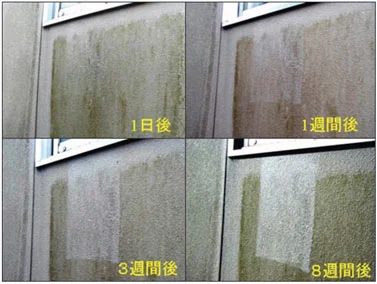
The photocatalyst provides strong antifungal performance even in locations with limited ultraviolet exposure, such as north-facing walls and bathrooms. TAG100 was applied to a wall with existing fungal growth; the photographs below show the results after eight weeks.
Deodorizing Performance
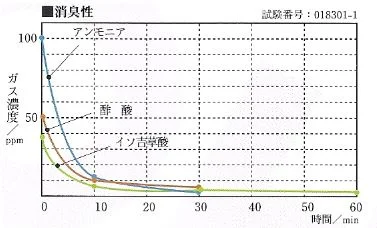
Everyday environments contain many odors generated by organic substances. TAG100 adsorbs and continuously decomposes these unpleasant gases, effectively preventing odor buildup.
Deodorization Test of Organic Gases Using a Towel Coated with TAG100
Initial Gas Concentrations: Ammonia 100 ppm; Acetic Acid 50 ppm; Isovaleric Acid (C5H10O2) 38 ppm — Deodorization Performance
Decomposition of Hazardous VOCs (Volatile Organic Compounds)
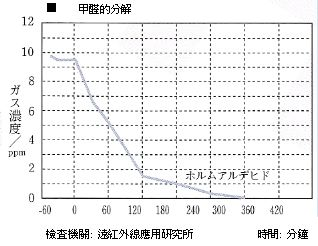
TAG100 decomposes and removes harmful chemical gases associated with sick building syndrome. The figure below shows a formaldehyde decomposition test, with the results recorded after several hours of TAG100 treatment:
Powerful Decomposition Performance
The photograph below shows a commercially available white tile. The left half was first coated with TAG100, and the entire tile was then stained with red ink. The results were recorded after several minutes of irradiation.
Conditions: 20 W UV lamp, vertically irradiated from a height of 1 meter
Organic Matter Decomposition Test (Red Ink Fading Test)
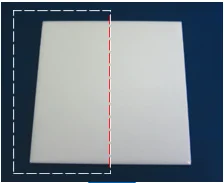
Photocatalyst Applied to Left Half
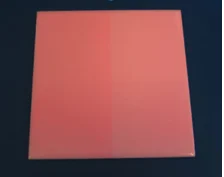
Photocatalyst Then Sprayed over the Entire Tile
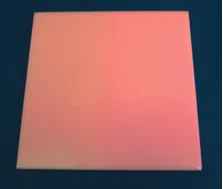
After 3 Minutes
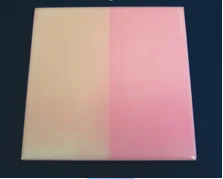
After 5 Minutes
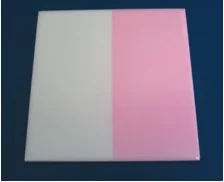
After 10 Minutes
Long-Term Durability of the Photocatalytic Film
After TAG100 is applied and dried for two hours, it forms a film that resists peeling even under strong wind and rain. The film continues to harden, reaching a pencil hardness of 4H–5H after several weeks. It remains stable in harsh outdoor conditions and provides long-lasting photocatalytic performance.