

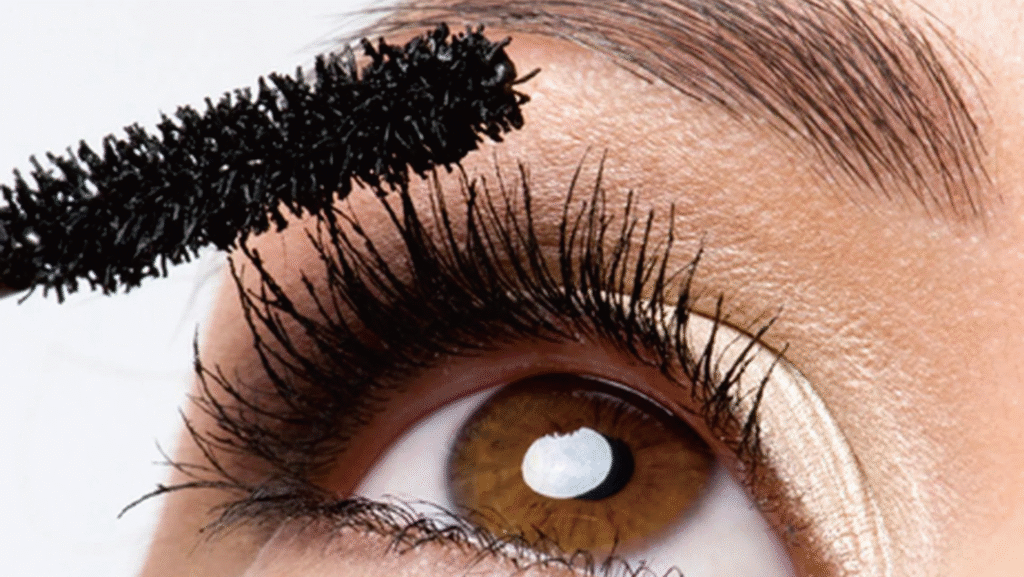
VINYSOL Film-Forming Agent for Cosmetics
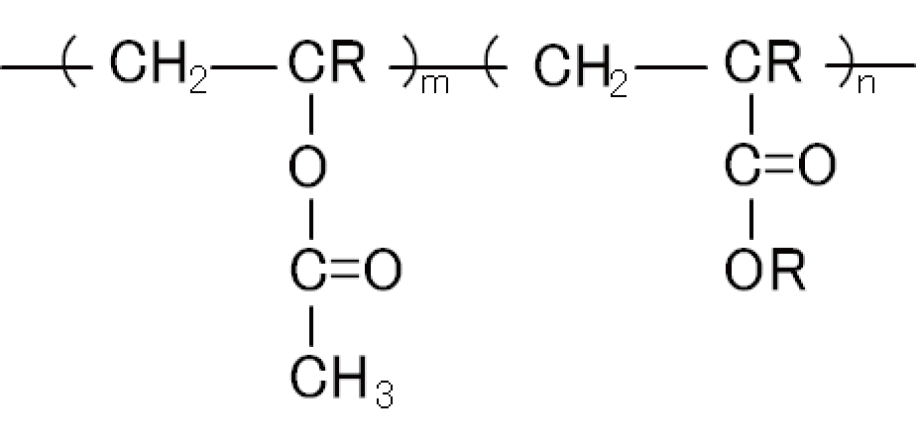
Chemical Structure
Grades and Applications
| Grade | 1086WP | 2140LH | 1012JC | 1087FT |
|---|---|---|---|---|
| INCI Name |
Ammonium Acrylates Copolymer | Acrylates/VA Copolymer |
Ammonium Styrene/ Acrylates Copolymer |
Ammonium Acrylates Copolymer |
| INCI Name | Ammonium Acrylates Copolymer | Acrylates/VA Copolymer | Ammonium Styrene/Acrylates Copolymer | Ammonium Acrylates Copolymer |
| Solid Content (%) | 40 | 45 | 45 | 55 |
| Viscosity (mPa·s) | 10 | 500 | 100 | 100 |
| pH | 8 | 4.5 | 8 | 8 |
| Glass Transition Temperature (°C) | 10 | 20 | 15 | −100 |
| Application | ||||
| Eyeliner (Water-Based) | ✓ | ✓ | ✓ | ✓ |
| Mascara (Water-Based) | ✓ | ✓ | ✓ | ✓ |
| Nail Polish (Water-Based) | ✓ | ✓ | ✓ | |
| False-Eyelash and Double-Eyelid Adhesive (Bonding) | ✓ | ✓ | ||
| Double-Eyelid Adhesive (Shrinkage) | ✓ | |||
| Skin-Care Peel-Off Mask | ✓ | |||
Examples
* Removable with Warm Water
For cosmetics intended to be removed with warm water, such as mascara, liquid eyeliner, and hair-styling products
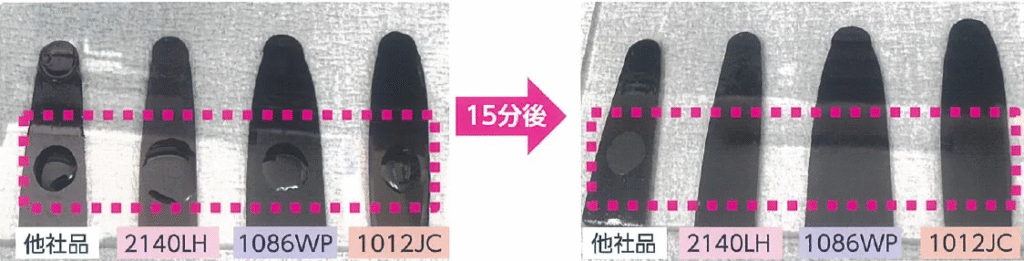
◇ Comparison of Films Before and After Immersion in Warm Water
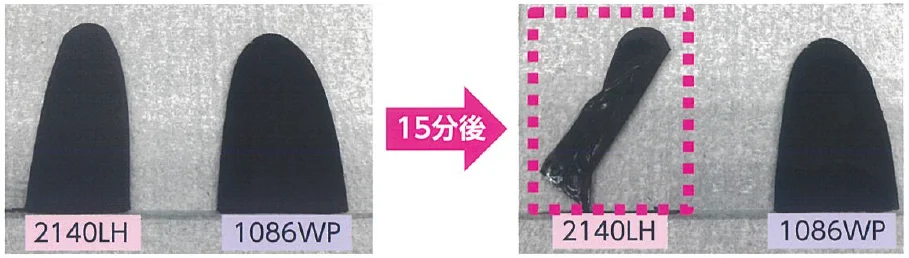
⇒ VINYSOL 2140LH can be easily removed as a continuous film.
Film-Formation Conditions: Mixed with a pigment dispersion and applied to a glass plate at room temperature. Immersion Conditions: Tap water at approximately 40°C for 15 minutes.
* Sebum Resistance
◇ After film formation, caprylic/capric triglyceride (artificial sebum) was applied and left for 15 minutes; surface conditions were compared after the oil was wiped away.
⇒ The area exposed to oil on the competitor’s styrene/acrylate product was eroded and softened.
No erosion was observed in the areas of VINYSOL exposed to the various oils, demonstrating excellent sebum resistance.
Film-Formation Conditions: Mixed with a pigment dispersion and applied to a glass plate at room temperature. * Only 1012JC contained 3% film-forming aid during film formation.
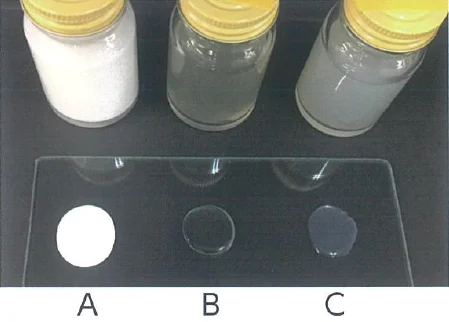
* For Clear Formulations
Adding ethanol to VINYSOL 2140L/LH enables its use in clear formulations.
A: Undiluted VINYSOL 2140LH
B : VINYSOL2140LH+Ethanol
C : VINYSOL2140L+Ethanol