


The Difference Between Antibacterial Action, Bactericidal Action, and Sterilization
In everyday consumer information and health education, the terms “antibacterial,” “bactericidal,” and “sterilization” are often confused. From a microbiological perspective, however, microbial control is not an all-or-nothing battle of eradication.
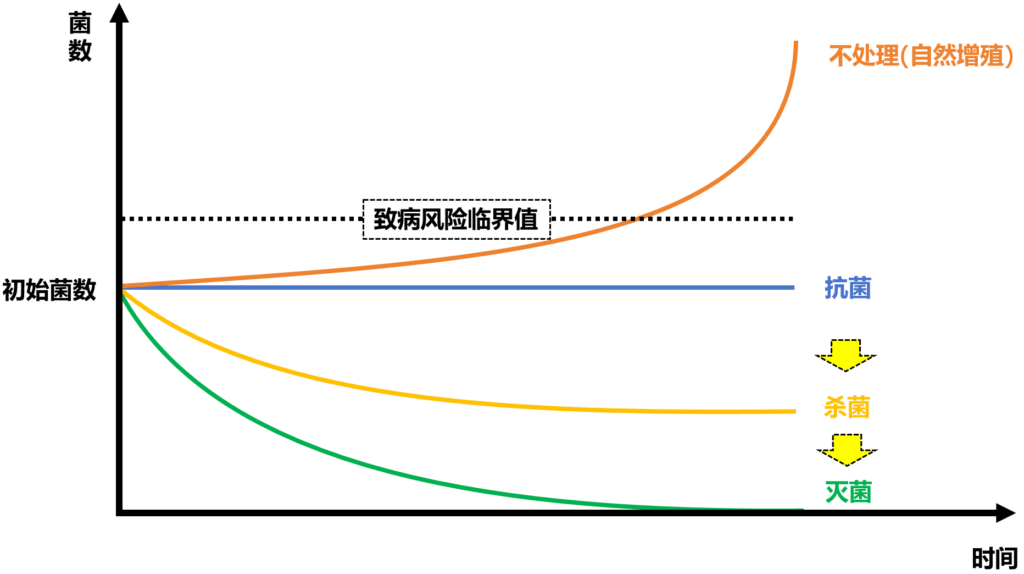
If we plot these microbial-control approaches on a graph (time on the horizontal axis and the number of viable bacteria on the vertical axis), the essential differences among antibacterial action, bactericidal action, and sterilization become immediately clear.
1. Antibacterial: Inhibiting Growth and Maintaining Balance
Curve Characteristics:A gently sloping horizontal line。
Antibacterial action uses physical or chemical means to keep microbial growth at a relatively low and stable baseline, preventing both rapid increases and sudden declines.
In other words, antibacterial control maintains a dynamic balance between bacterial reproduction and intervention-related reduction, keeping the total viable count within a safe range that avoids outbreaks and disease.
2. Bactericidal: A Steep Decline and Rapid Reduction
Curve Characteristics:A sharply descending line over a short period。
Bactericidal action uses physical or chemical methods, such as ultraviolet light or hypochlorous acid, to directly damage bacterial cell walls and cause irreversible lethal injury, thereby reducing the number of viable bacteria.
3. Sterilization: Reaching Zero and Complete Elimination
Curve Characteristics: A sharp decline approaching zero and ultimately reaching the bottom。
Sterilization is the highest level of physical or chemical microbial elimination, such as autoclaving or alcohol treatment. It destroys not only all vegetative bacteria but also hard-to-kill bacterial spores, achieving medical-grade sterility.
Does Absolute Sterility Mean Absolute Safety?
After understanding these microbial-count curves, we must guard against a common misconception:Does a higher degree of microbial elimination always mean greater safety?
Scientifically, the concept of absolute sterility is not appropriate for ordinary living environments:
Microorganisms such as bacteria and fungi are widespread in air, soil, water, and on the surfaces of many materials.
Large resident microbial communities inhabit our skin, intestines, and everyday surroundings, forming a natural biological barrier.
Microorganisms are everywhere, but not all are harmful. Pushing safety to the extreme of sterility is not only impractical in daily life; it can also create new health and ecological risks:
- Disruption of the Body’s Microecological Barrier
Frequent use of bactericidal or sterilizing measures in pursuit of absolute cleanliness kills beneficial protective microbes along with harmful ones. The resulting sterile vacuum can create favorable conditions for pathogenic or drug-resistant bacteria to invade and proliferate.
- Risk of Antimicrobial Resistance
Frequent bactericidal treatment places intense survival pressure on the remaining bacteria. A small number of surviving mutant strains may develop greater resistance to treatment and evolve into difficult-to-control superbugs.
- Immune Imbalance
An excessively sterile environment deprives the immune system of necessary microbial stimulation and may increase children’s risk of immune-mediated conditions such as asthma, allergic rhinitis, and atopic dermatitis.
- Higher Cleaning Costs
Bactericidal treatment and disinfection are generallyimmediate, short-term measures.Especially in large spaces such as hospitals, schools, offices, and public transportation, continuous manual disinfection requires substantial time, labor, and management resources.
Gentle Microbial Control Is True Safety
Sterilization and bactericidal treatment are essential in operating rooms, sterile pharmaceutical facilities, and wound care. In everyday homes, laundry, personal care, and frequently touched surfaces, however, antibacterial control is the more appropriate choice.
The essence of antibacterial protection is gentle microbial control. Rather than pursuing complete elimination, it suppresses abnormal bacterial proliferation and keeps microbial counts steadily within a safe range, helping prevent:
1. Excessive growth of harmful microorganisms
2. Odors, contamination, or health risks caused by microbial metabolism
True safety means maintaining a stable and harmonious balance between people and microorganisms.
We provide safer, more stable, and longer-lasting antibacterial solutions that give products active protective capabilities and help create safer living environments.