


IXE Inorganic ION Capture Agent
There are many types of ion-capture materials. Organic ion-exchange resins have poor heat resistance and generally can be used only below 100°C. They also lack resistance to organic solvents, limiting their use outside aqueous systems. Inorganic ion exchangers such as clay minerals and zeolites also have shortcomings, including insufficient heat resistance, poor product stability, and low water resistance. IXE ION Capture Agent overcomes the disadvantages of conventional ion exchangers and offers excellent heat resistance and ion-exchange properties.
Features
· Excellent heat resistance; usable above 100°C.
· High ion selectivity, enabling specific ions to be selectively removed from coexisting ions.
· Highly effective even under anhydrous conditions.
· Excellent radiation resistance, retaining its performance under intense radiation.
· Resistant to organic chemicals and highly durable in molten resins.
· Strong oxidation resistance; suitable for highly oxidative environments.
· Gas-adsorption capability under high-temperature conditions.
Applications
· IC encapsulation materials
· FPC (flexible printed circuit) adhesives and solder resist inks
· Coatings and paints
· Purification of organic solvents and monomers, and other applications
Mechanism
Adding this agent captures impurity ions in encapsulants and improves the reliability of electronic materials.
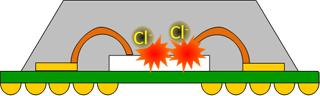
Without IXE
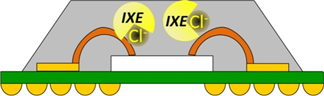
With IXE
Application Examples
Improved Corrosion Resistance of ICs and Other Electronic Materials
IXE captures impurity ions such as Na, Cl, and Br in IC encapsulation materials, preventing corrosion of wiring and electrodes in epoxy resin and improving the corrosion resistance of ICs and other electronic materials.
● Wiring-corrosion suppression test using epoxy resin containing IXE
· 0.5% IXE-770D added / No IXE-770D added
· IXE-770D was added to bisphenol epoxy resin, which was then coated onto the wiring and cured.
· Wiring width: 20 μm; wiring spacing: 20 μm
· Unsaturated pressure-cooker bias test (130°C, 85% RH, 20 V, 20 hours)
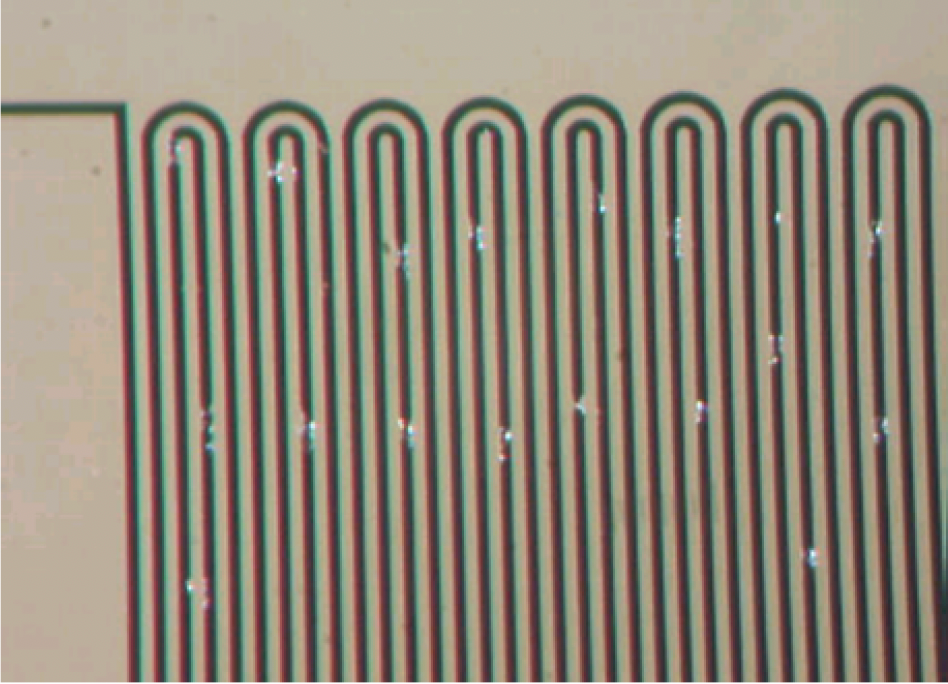
Without IXE
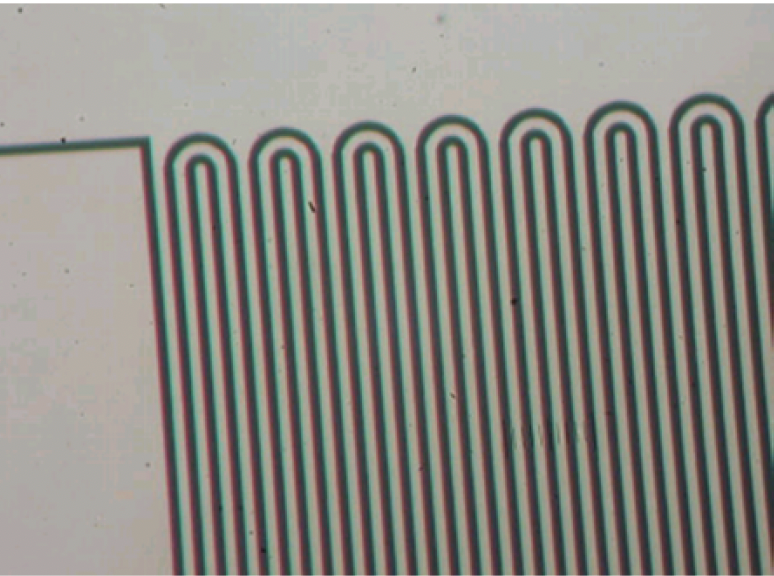
With 0.5% IXE
● Wiring-migration suppression test using epoxy resin containing IXE
· Epoxy acrylate resin: 98 parts; IXE-633: 2 parts
· Wiring width: 20 μm; wiring spacing: 20 μm
· Unsaturated pressure-cooker bias test (121°C, 97% RH, 100 hours)
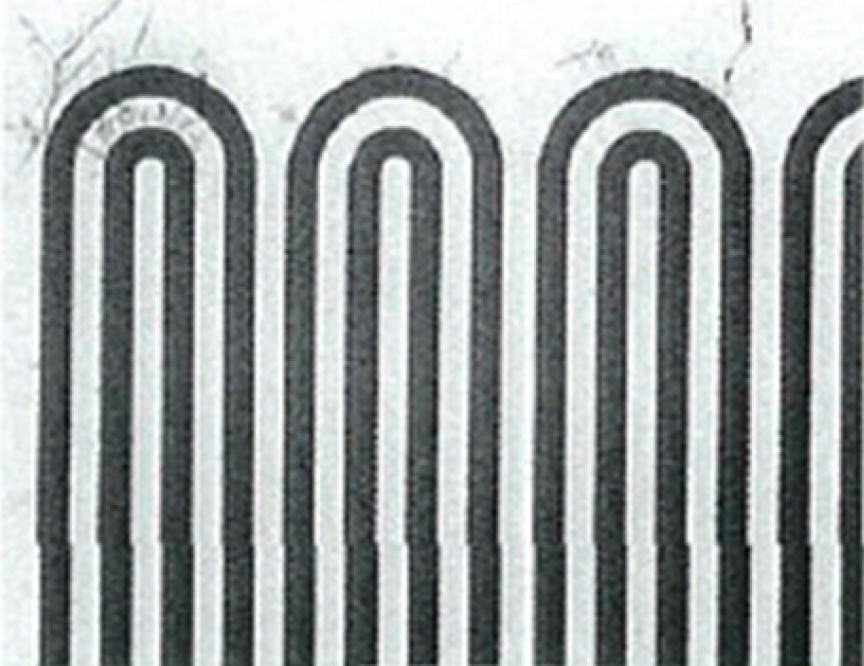
Without IXE
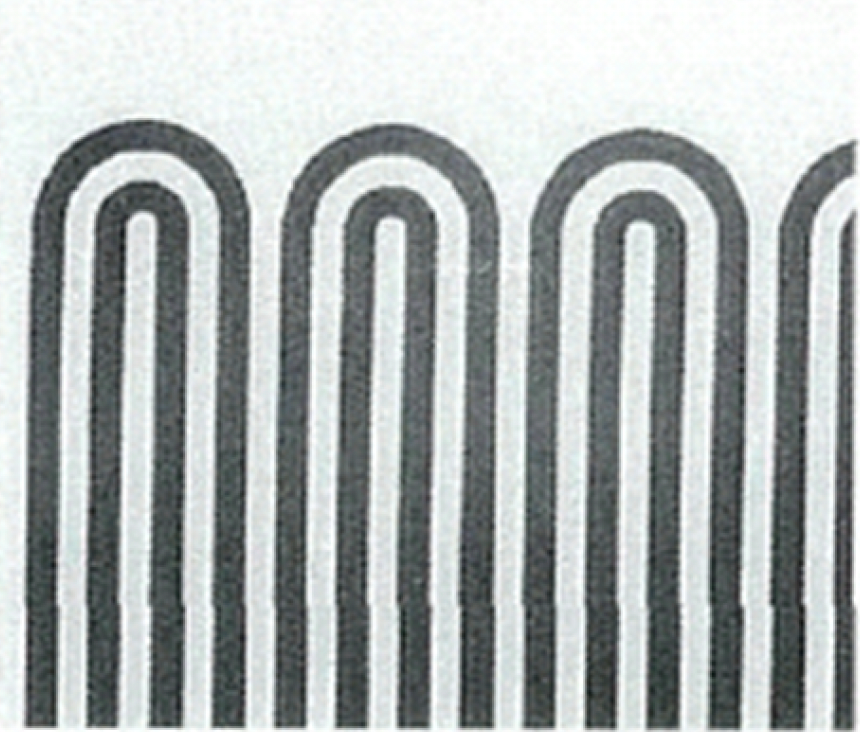
With 2% IXE
● Copper-wire migration test with IXE
· Epoxy acrylate + urethane acrylate resin: 98 parts; IXE-770D: 2.0 parts
· Line width: 50 μm; line spacing: 50 μm
· Damp-heat bias test (85°C, 85% RH, 50 V, 500 hours)
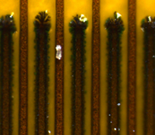
Without IXE
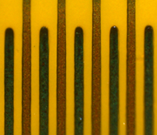
With 2% IXE
IXE Grade List
| Grade | Reaction Type | Particle Size | Composition | Total Exchange Capacity (meq/g) | Neutral Exchange Capacity (meq/g) | Acid Resistance | Alkali Resistance | Heat Resistance (°C) |
|---|---|---|---|---|---|---|---|---|
| IXE-100 | Cation Exchange | 1.0 | Zr | Na+ 6.6 | Na+ 3.3 | ◎ | ○ | ~550 |
| IXE-300 | Cation Exchange | 0.5 | Sb | Na+ 4.0 | Na+ 2.3 | ◎ | ◎ | ~400 |
| IXE-500 | Anion Exchange | 1.5 | Bi | Cl - 3.9 | Cl - 1.8 | ○ | ◎ | ~400 |
| IXE-530 | Anion Exchange | 1.5 | Bi | Cl - 3.7 | Cl - 1.8 | ○ | ◎ | ~400 |
| IXE-550 | Anion Exchange | 1.5 | Bi | Cl - 4.1 | Cl - 1.8 | ○ | ◎ | ~400 |
| IXE-600 | Dual Ion Exchange | 1.0 | Sb/Bi | Na+ 2.0 Cl - 2.0 | Na+ 1.5 Cl - 2.0 | ○ | ◎ | ~400 |
| IXE-633 | Dual Ion Exchange | 1.5 | Sb/Bi | Na+ 1.3 Cl - 2.8 | Na+ 1.3 Cl - 1.8 | ○ | ◎ | ~400 |
| IXE-700F | Anion Exchange | 1.5 | Mg/Al | Cl - 4.5 | Cl - 4.5 | △ | △ | ~600 |
| IXE-700D | Anion Exchange | 6 | Mg/Al | Cl - 4.5 | Cl - 4.5 | △ | ○ | ~300 |
| IXE-800 | Anion Exchange | 2 | Zr | Cl - 1.0 | Cl - 0.2 | △ | ◎ | ~300 |
| IXE-6107 | Dual Ion Exchange | 1.5 | Zr/Bi | Na+ 1.4 Cl - 2.3 | Na+ 2.0 Cl - 2.7 | ○ | ◎ | ~400 |
| IXE-6136 | Dual Ion Exchange | 2.1 | Zr/Bi | Na+ 1.3 Cl - 2.0 | Na+ 2.6 Cl - 2.2 | ○ | ◎ | ~400 |