

Static Mixers
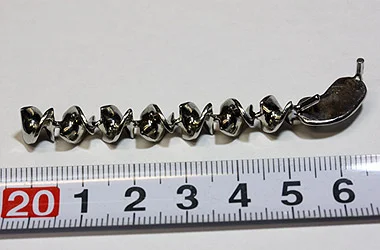
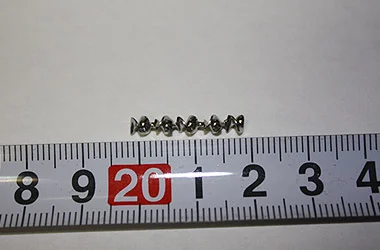
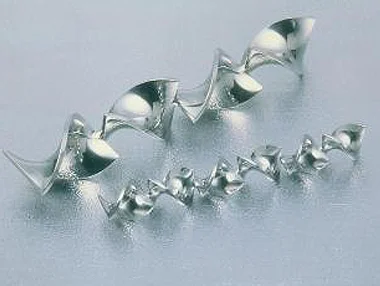
A static mixer is a mixing device with no rotating drive parts. It requires neither a vessel nor an agitator and performs mixing through the flow of the polymer.
Applications
Petrochemicals and Plastics
Fibers and Pulp
Resins and Adhesives
Electronics
Environmental Applications
Food
Medicine and Pharmaceuticals
Basic Functions
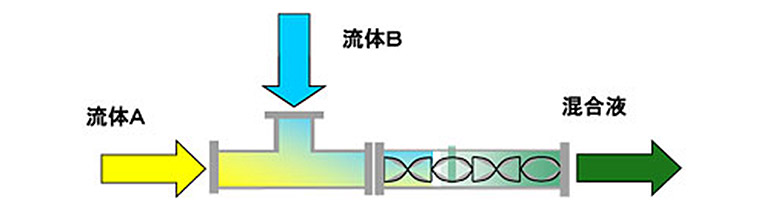
| ① Mixing | Compared with conventional batch processing systems, it provides superior mixing repeatability and uniformity while saving energy and space. |
| ② Homogenization | Improves the uniformity of molten raw materials during resin molding and enhances measurement accuracy through temperature and concentration monitoring. |
| ③ Direct Heating | In liquid heating by direct steam injection, the static mixer disperses the steam more finely and uniformly, greatly shortening heating time. Its mixing effect also improves heating uniformity. |
| ④ Heat Exchange | The flow-conversion action of the static mixer greatly increases heat-exchange efficiency (three to five times), making it effective in all heat-exchange processes, including silicone-oil heating and cooling in food manufacturing. |
| ⑤ Reaction | The plug flow generated by the static mixer and efficient transfer of reaction heat enable reaction processes through heat exchange, including continuous polymerization and chemical reactions such as maleation. |
| ⑥ Gas Intake | Inside the static mixer, bubbles in the liquid are made finer, increasing the gas-liquid contact area and significantly improving gas dissolution. Applications include aeration, gas-supply processes, carbonation in brewing, and ammonia absorption by water in ammonia-water production. |