


TECHPOLYMER Spherical Specialty Microparticles
TECHPOLYMER is a line of spherical and specialty particles developed by Sekisui Kasei using its proprietary suspension-polymerization technology.
TECHPOLYMER, based mainly on methyl methacrylate, styrene, and various hydrophobic vinyl monomers, is a transparent resin particle line with light-diffusing properties. It can reduce the gloss of pigments and coatings, improve scratch resistance, and enhance smoothness when blended into foundation, making it suitable for a wide range of applications.

• Application
- Displays (LCD)
- LED Lighting (Light diffusion)
- Paints / Inks
- Cosmetics
- Other Applications
Size
TECHPOLYMER particle sizes can be adjusted from the submicron and micron ranges up to the millimeter range (*). A suitable size can be selected from the various product series according to the intended application.
Micron Range
The average particle size can be adjusted from 1 to 200 μm (*). Selecting the appropriate average particle size allows the light-diffusion effect to be adjusted. In plastic extrusion films and coatings, it can also be used to control surface texture and appearance.
* Particle size distributions and specified refractive indices are available depending on particle size.
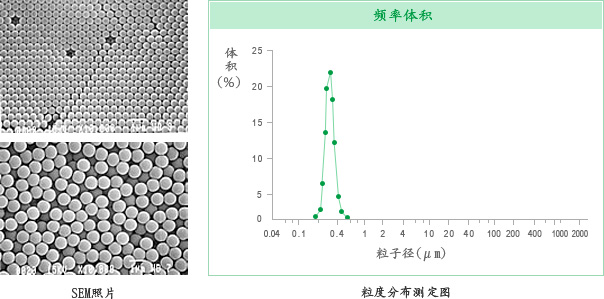
Submicron Range
The average particle size can be adjusted from 0.1 to 1 μm. Fine, uniform particles can be supplied as a dry powder or slurry. When finer particles are required, a material in which the core is coated by dry blending may also be considered.
Application Diagram
Product Lineup
| Composition | Average Particle Size | Composition | Average Particle Size |
| Polymethyl Methacrylate | 0.1μm | Polymethyl Methacrylate | 0.3μm |
| Cross-linked Polymethyl Methacrylate | 0.1μm | Cross-linked Polymethyl Methacrylate | 0.3μm |
Particle Size Distribution
Various particle size distributions are available for different applications. When a more uniform distribution is required, products can be supplied using our proprietary particle-size-distribution control technology. For even greater uniformity, an additional classification grade that removes coarse particles is also available.
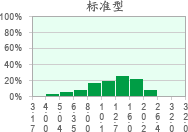
Standard Type
Representative particle size distribution of standard TECHPOLYMER grades. These grades can be compounded into films, coatings, cosmetics, and many other products.
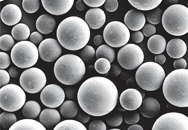
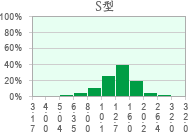
S Type
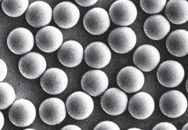
These sharply classified fine particles are polymerized using a new process and offer a narrower particle size distribution than conventional products. They are suitable as film spacers where coarse particles are undesirable and provide an anti-blocking effect.
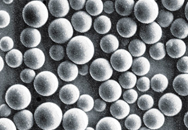
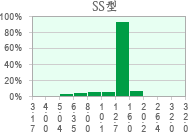
SS Type
Monodispersed particles with a narrower particle size distribution than the MBX-S Series. Suitable for displays and other applications requiring high-precision particle size distribution.
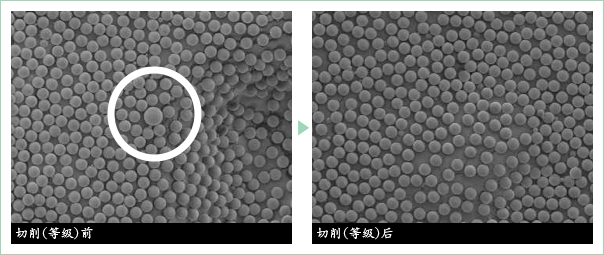
Coarse-Particle Removal
Our extensive classification expertise enables us to meet a wide range of high-precision requirements. Coarse particles can be removed to achieve a more uniform coating.
Particle Shape Control
In addition to our conventional spherical-particle technology, we have established new shape-control technology and developed non-spherical particles as well as particles with controlled internal structures, including porous and hollow particles.
Because non-spherical particles have anisotropic shapes, they exhibit a variety of powder properties depending on their shape.
Porous and hollow particles contain large voids and therefore have a lower specific gravity than ordinary particles. They can also provide enhanced light diffusion, adhesion, and other properties.
Lenticular
Using our proprietary shape-control technology, we successfully developed non-spherical particles with a biconvex lenticular shape. When used as a light-diffusing material in optical films, they can improve total light transmittance compared with spherical particles. They also provide high haze and high light transmittance while controlling loss of surface gloss in the film.
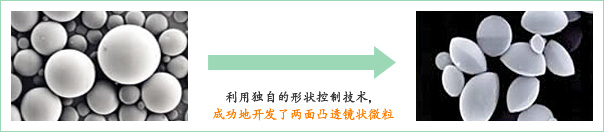
| Shape and Size | |||
| Composition | Cross-linked Polymethyl Methacrylate | Shape | Biconvex Lenticular |
| Average Particle Size | 3–12 μm (Equivalent Spherical Diameter) | Average Aspect Ratio | 1.2~1.8 |
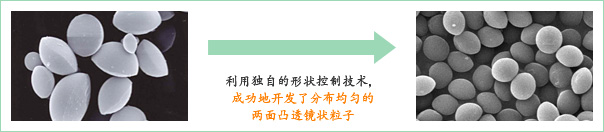
Monodispersed Lenticular
Through further development, we created non-spherical particles with uniform particle sizes.
When particles combine an anisotropic shape with uniform size, the distinctive properties of that shape can be fully utilized.
In addition to hemispherical and lenticular particles, we are developing even more distinctive shapes.
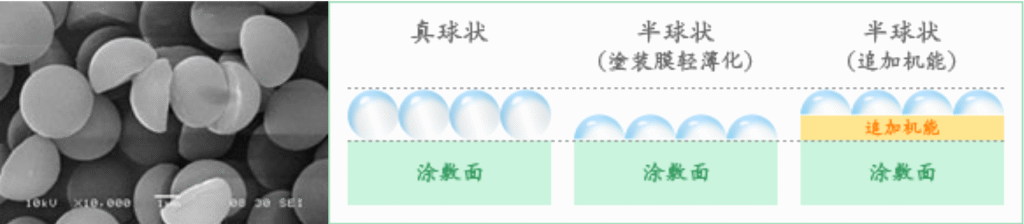
Monodispersed Hemispherical
We developed hemispherical particles with uniform particle sizes.
When used as a light-diffusing material in optical films, their half-height geometry makes it possible to reduce the surface-coating thickness while maintaining optical properties compared with spherical particles.
Alternatively, while maintaining the coating thickness, an additional layer with enhanced functionality can be incorporated.
Monodispersed Non-Spherical
As new particle shapes, we have successfully produced mushroom-shaped particles and partially indented spherical particles (concave type), in addition to conventional biconvex lenticular and hemispherical particles. These new-shaped particles are expected to find applications not only in optics but also in a variety of new fields.
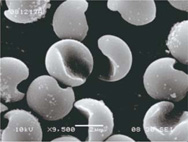
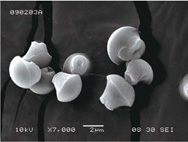
Partially Indented Spherical Shape (Concave Type)
Mushroom Shape
Structure
Single-Hollow
We developed single-hollow particles containing one cavity inside each particle.
Their low density and the difference in refractive index between the internal cavity (air layer) and the shell (resin layer) provide light reflection, diffusion, and other properties not found in solid particles.
| MBX | Single-Hollow Particles | |||
| Average Particle Size (μm) | 3 | 3 | ||
| Dosage (%/PC Sheet) | 0.5 | 1.0 | 0.5 | 1.0 |
| Diffusion (%) | 24 | 45 | 40 | 69 |
| Total Light Transmittance (%) | 86.5 | 77.4 | 77.5 | 59.2 |
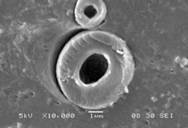
Cross Section of a Single-Hollow Particle
Multi-Hollow
We developed multi-hollow particles containing numerous cavities. Their low density and the difference in refractive index between the internal cavities (air layers) and the shell (resin layer) provide light reflection, diffusion, and other properties not found in solid particles.
| MBX | Multi-Hollow Particles (PMMA Composition) | SBX | |
| Average Particle Size (μm) | 8 | 8 | 8 |
| Dosage (%/PMMA Sheet) | 3 | 3 | 3 |
| Diffusion (%) | 0 | 90 | 85 |
| Total Light Transmittance (%) | 90.1 | 48.2 | 58.8 |
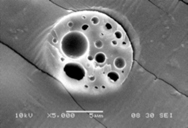
Cross Section of a Multi-Hollow Particle
Porous
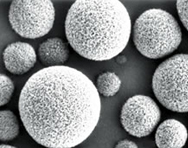
Fine particles can be made porous, and their specific surface area can be adjusted. Numerous fine pores are formed within each particle to create a porous structure.
Their porous properties make them suitable for use in adhesives, lightweighting agents, and pore-forming agents.
Particle size and specific surface area can be adjusted.
Core-Shell
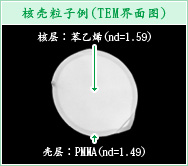
Core-shell particles can be produced with a core (inner layer) and shell (outer layer) of different compositions.
The core (inner layer) and shell (outer layer) can be combined in a variety of ways.
The refractive index can be designed to decrease from the particle center toward the surface, or conversely to increase from the center toward the surface. Compatibility and dispersibility with matrix resins and binders can also be improved.
Light reflection at the interface with the matrix resin can be reduced.
Surface Treatment Technology
We modify particle surfaces to support a broad range of customer product designs. Controlling the particle surface further improves processing performance and functionality. Please contact us if incompatibility or other issues arise with the resin or solvent being used. We have also developed particles with distinctive surfaces using our proprietary polymerization technology.
Surface Property Modification (Hydrophobicity/Hydrophilicity)
Surface property modification can alter the affinity of hydrophobic particles for water.
Drawing on our accumulated experience and expertise, we also design and propose particles with high compatibility in customers’ formulations for pigments, coatings, and other products.
Expected Benefits
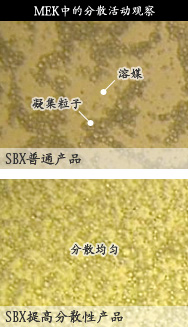
● Uniform dispersion in coating films.
● High optical performance.
● Stable appearance and enhanced design characteristics.
Electrical Conductivity
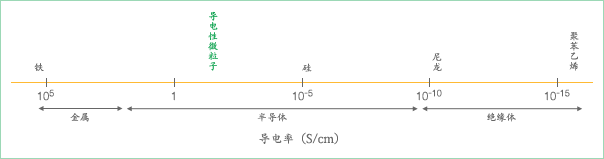
Conductive particles have a coating structure formed by layer-polymerizing a conductive polymer on the particle surface. Because this technology can be applied to existing particle types, particle size and particle size distribution can be adjusted as needed. Compared with metal oxides, the particles are lighter, and because only the particle surface is coated, light transmittance can be maintained.
Expected Benefits
● Properties of conventional TECHPOLYMER products
● Antistatic and electromagnetic-wave shielding effects
● Weight reduction and other benefits
Expected Benefits
● Various electrical devices
● Electromagnetic-wave shielding materials
● Conductive coatings
● Electrode materials, solar-cell component materials, and more
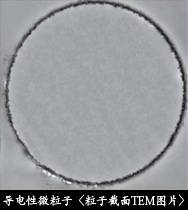
| Conductive Particles | Conductivity (S/cm) |
| 5 μm Particle Size Type | 7.9×10⁻² |
Charging Characteristics
The charge level of the particles can be controlled.
The polarity and magnitude of the charge can be adjusted, allowing the particles to be used as charge-control agents. They can also be used as additives to impart charging properties.
| Resin Composition | Particle Size | Form | Charge | Charge Level (*) |
| Polymethyl Methacrylate | 0.1μm | Powder | Positive Charge | +27μC/g |
| 0.3μm | +2μC/g | |||
| Polymethyl Methacrylate | 0.1μm | Powder | Negative Charge | – |
| 0.3μm | -21μC/g | |||
| Cross-linked Polymethyl Methacrylate | 0.1μm | Powder | Positive Charge | +22μC/g |
| 0.3μm | +7μC/g | |||
| Cross-linked Polymethyl Methacrylate | 0.1μm | Powder | Negative Charge | -15μC/g |
| 0.3μm | – |
* Charge level measured using simulated toner prepared by externally adding 3% submicron particles to 10 μm particles.
Adhesion
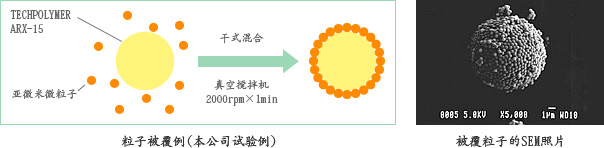
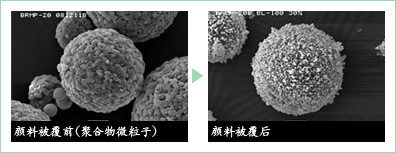
We developed particles whose surfaces can be readily coated with inorganic pigments. Selecting the optimum pigment allows the particles to deliver the desired functionality.
Examples: Titanium oxide (UV scattering), alumina (light scattering)
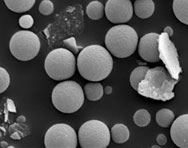
PAC-M810
PAC-M810 is a newly developed additive for cosmetics.
These soft spherical particles combine cross-linked porous PMMA particles with highly adhesive plate-like calcium hydrogen phosphate using our proprietary technology, successfully bringing together the advantages of both materials.
PAC-2
These composite particles consist of spherical resin particles coated with ultrafine, low-crystallinity hydroxyapatite particles. They combine the pleasant feel and light-diffusing properties of spherical resin particles with the adhesive functionality of hydroxyapatite.
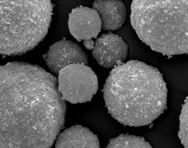
Particle Property Control
TECHPOLYMER can provide added value in a wide range of applications by controlling various physical properties. For display applications, many grades with adjusted refractive indices are available, and adjusting the refractive index of TECHPOLYMER produces a variety of light-diffusion effects. For coating applications, grades with different levels of hardness are also available. Soft grades can significantly improve the feel of coated surfaces.
Refractive Index Adjustment
Grades with various adjusted refractive indices are available.
The refractive index can be adjusted within the range shown at right.
Optical properties can be controlled by adjusting the size and refractive index of TECHPOLYMER.
Expected Benefits
● Diffusing materials suitable for a variety of transparent materials.
● Diffusing materials suitable for a variety of binders.
● High diffusion efficiency
● High light-blocking effect

Hardness Adjustment
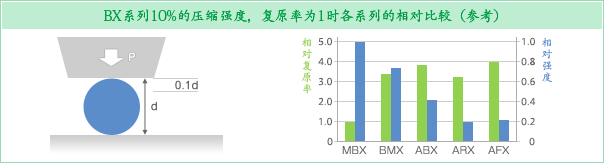
Particles with various levels of softness are available through combinations of different materials.
An excellent balance of softness and recovery absorbs rubbing forces effectively and improves the scratch resistance of coating films.
Fine particles with various degrees of softness can improve tactile feel.
In addition, the compressive strength of the ARX and AFX Series changes very little with temperature, so their hardness is less affected by the operating environment.
Expected Benefits
● Excellent abrasion resistance helps prevent scratches.
● Improves the feel of coating films and cosmetic films.
● Because hardness is less affected by environmental conditions, these particles are suitable for applications requiring high precision.
| 10% Compressive Strength (kgf/mm²) | Recovery Rate (%) | |
| MBX Series | 2.50 | 5.3 |
| BMX Series | 1.85 | 16.0 |
| ABX Series | 1.05 | 17.6 |
| ARX Series | 0.50 | 15.0 |
| AFX Series | 0.55 | 20.0 |
Stability Enhancement
To ensure reliable use of TECHPOLYMER even under extremely demanding conditions, we offer highly stable particle grades.
● Helps improve the stability of customers’ products after TECHPOLYMER is incorporated.
● Supports safe production by expanding customers’ material choices in manufacturing processes.
Solvent Resistance
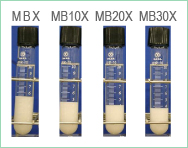
The solvent resistance of particles can be improved by controlling the degree of cross-linking. As shown below, swelling decreases as the degree of cross-linking increases.
| MBX Series | |||
| MBX | MB10X | MB30X | |
| Ethanol | 0.04 | 0.03 | 0.02 |
| Acetone | 0.66 | 0.43 | 0.24 |
| MEK | 0.61 | 0.45 | 0.23 |
| Ethyl Acetate | 0.76 | 0.44 | 0.22 |
| Ethylene Glycol Monobutyl Ether | 0.12 | 0.08 | 0.05 |
| Toluene | 0.12 | 0.02 | 0.00 |
* Solvent absorption by 1 g of polymer (g/g) after immersion at 50°C for 48 hours. |
Solvent Resistance Test in MEK
The test results demonstrate that swelling decreases as the degree of cross-linking increases.
Expected Benefits
● Expands formulation options for pigments and coatings.
● Extends curing time.
● Improves production-line efficiency.
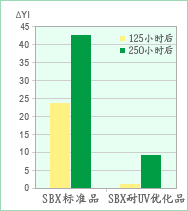
UV Resistance
Particles are designed to prevent deterioration, discoloration, and other changes caused by ultraviolet radiation.
Expected Benefits
● Provides weather resistance for backlights and outdoor coatings.
● Suitable for use in resin products.
UV Resistance
Heat resistance, normally around 250°C, can be increased to 280°C.
Expected Benefits
● Provides heat resistance for backlights and other applications requiring stable performance at elevated temperatures.
● Suitable for resin products processed at high temperatures.
Other Technologies
We meet customer needs with a variety of technologies that broaden the possibilities for product design.
One example of these technologies is presented below.
Molecular Weight Adjustment
The molecular weight of products for adhesive applications can be adjusted to meet specific requirements.
Molecular weight can be adjusted from 50,000 to 1,000,000.
This helps control dissolution rate and viscosity.
Thermal Decomposition
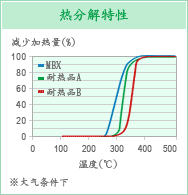
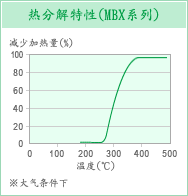
Spherical particles can be used to create pores in ceramics. Select the appropriate particle size for the intended application. When a mixture of ceramic powder and TECHPOLYMER is molded and fired, the pore size can be adjusted according to the particle size.
Tg Adjustment
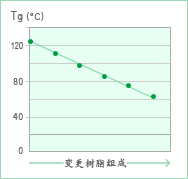
Tg can be adjusted as required by modifying the resin composition.
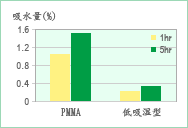
Moisture Absorption
The moisture absorption of the particles can be controlled.
For example, polymethyl methacrylate can be used not only to design particles with resin compositions that control moisture absorption but also to provide hydrophobic fine particles.
Suitable for products where water must be avoided.