


Globule® SW-20 Natural Eucalyptus Deodorant
This highly safe, water-soluble deodorant ingredient is made by blending essential oil obtained through steam distillation of leaves from Eucalyptus globulus Labillardiere or related Myrtaceae species with organic acids, surfactants, water, and other ingredients.
Features
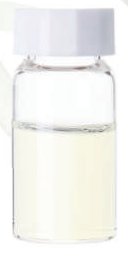
| Appearance | Colorless to Pale Yellow Transparent Liquid |
| Odor | Eucalyptus-Like Odor |
| PH | 3.5-5.5 |
| Specific Gravity | 0.900-1.100(20℃) |
| Solubility | Readily Soluble in Water and Ethanol |
| Applications | General Goods, Cosmetics, and Quasi-drugs (formulated with ingredients listed in the 2006 Japanese Standards of Quasi-drug Ingredients) |
Uses:Toilets, Rooms, Refrigerators, Pet-Care Areas, Kitchens, Bathrooms, Entrances, and Body-Odor Control
Use Concentration:Approximately 5% Recommended
Deodorizing Performance
| Odorous Substance (ppm) | Deodorization Rate (%) |
|---|---|
| Ammonia | 99.7< |
| Trimethylamine | 98.5< |
| Acetic Acid | 98.0< |
| Isovaleric Acid | 97.6< |
| n-Butyric Acid | 94.0< |
| Nonenal | 82.4 |
| Diacetyl | 87.4 |
| Nonanoic Acid | 91.0 |
| Skatole | 92.5 |
• 1,8-Cineole reduces the concentration of odorous gases through van der Waals forces and hydrogen bonding.
• 5 g of Product [Deodorizing Performance after 30 Minutes]
Antibacterial Performance
Preservative and Antifungal Performance
Aqueous solutions at concentrations of 0.5% or higher have confirmed preservative and antifungal performance.
Sample
Globule®SW-20 (0.5% Aqueous Solution), Globule®SW-20 (1.0% Aqueous Solution)
Test Method
Preservative Effectiveness Test (Japanese Pharmacopoeia, 17th Edition)
Test Organisms
Escherichia coli | (E.c) | Escherichia coli | NBRC 3972 |
Pseudomonas aeruginosa | (P.a) | Pseudomonas aeruginosa | NBRC 13275 |
Staphylococcus aureus | (S.a) | Staphylococcus aureus | NBRC 13276 |
Candida albicans | (C.a) | Candida albicans | NBRC 1594 |
Aspergillus niger | (A.b) | Aspergillus brasiliensis | NBRC 9455 |
Inoculation and Storage
Place 20 g of each sample in a sterile vial and inoculate with 0.15 mL of test-organism suspension (10⁵–10⁶ organisms per gram of sample). Store at 22.5°C and measure viable counts on days 7, 14, 21, and 28.
Viable Count Measurement
For bacteria, use the dilution pour-plate method with SCDLP agar. For fungi (yeasts and molds), use the dilution pour-plate method with Sabouraud dextrose LP agar.
Test Results
Changes in Sample Microbial Counts over Time after Inoculation
| Sample | Inoculated Organism | Initial Inoculum (CFU/g) | Microbial Count (CFU/g) | |||
|---|---|---|---|---|---|---|
| 7 Days | 14 Days | 21 Days | 28 Days | |||
|
Globule® SW-20 (0.5% Aqueous Solution) | E.c | 8.9×10⁵ | <101 | <101 | <101 | <101 |
| P.a | 4.8×10⁵ | <101 | <101 | <101 | <101 | |
| S.a | 7.9×10⁵ | <101 | <101 | <101 | <101 | |
| C.a | 3.9×10⁵ | 4.8×10² | 1.0×101 | <101 | <101 | |
| A.b | 1.6×10⁵ | 1.4×10⁵ | 1.5×10⁵ | 9.4×10⁴ | 8.7×10⁴ | |
|
Globule® SW-20 (1.0% Aqueous Solution) | E.c | 8.9×10⁵ | <101 | <101 | <101 | <101 |
| P.a | 4.8×10⁵ | <101 | <101 | <101 | <101 | |
| S.a | 7.9×10⁵ | <101 | <101 | <101 | <101 | |
| C.a | 3.9×10⁵ | 1.6×10² | 1.0×101 | 1.0×101 | <101 | |
| A.b | 1.6×10⁵ | 9.2×10⁴ | 9.0×10⁴ | 8.6×10⁴ | 8.2×10⁴ | |
E.c: Escherichia coli; P.a: Pseudomonas aeruginosa; S.a: Staphylococcus aureus; C.a: Candida albicans; A.b: Aspergillus niger
Testing Laboratory: Union Vitec Co., Ltd.