


ARON MELT Hot-Melt Adhesive
The PES Series consists of thermoplastic hot-melt adhesives with excellent heat resistance. Its molecular structures are designed for various hot-melt machines. PES can be applied to metals, plastics, fabrics, and wood, and bonds directly to polyester (PET) and flexible PVC without primer. Solvent-based, granular, and film types are available.
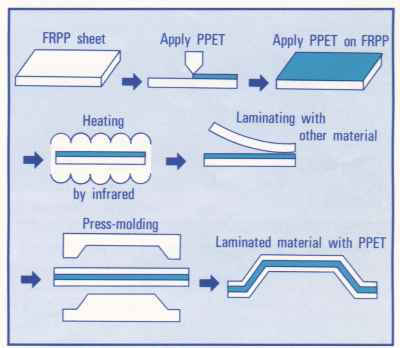
The PPET Series consists of hot-melt adhesives designed to bond PP, PE, PET, nylon, and other materials that are difficult to bond because of low surface adhesion and high crystallinity, without primer.
Aron Melt PES Series
Thermoplastic polyester hot-melt adhesives suitable for bonding identical or dissimilar materials, including PET, flexible PVC, and metals. They provide exceptional adhesion and durability, and different combinations of structural monomers can produce a variety of resin properties.
Features
1. Powerful adhesion: excellent adhesion to PET, PVC, other plastics, and metals; also suitable for large-area bonding of fibers, wood, and other materials.
2. Excellent durability: crystallinity provides the durability required for electrical components.
3. Easy application: convenient operation and short bonding time improve efficiency. Suitable for manufacturing films and sheets to meet customer requirements.
Solvent-Based Products
| Item | PES-310S30 | PES-320S30 | PES-360S30 | PES-375S40 | |
|---|---|---|---|---|---|
| Resin Properties | Appearance | Pale Yellow | Pale Yellow | Pale Yellow | Pale Yellow |
| R&B Softening Point (°C) | 120 | 105 | 150 | 120 | |
| Glass Transition Temperature (°C) | 8 | 12 | 65 | 23 | |
| Hardness (Shore D, 23°C) | 40 | 30 | 80 | 65 | |
| Liquid Properties | Solvent | Toluene : MEK = 8 : 2 | |||
| Solids Content (%) | 30 | 30 | 30 | 40 | |
| Viscosity (mPa·s, 25°C) | 285 | 140 | 130 | 430 | |
| Features and Applications | PET, PC, PVC | PET, PC, PVC | PC, PVC, and Metals | PET and Flexible PVC | |
| Good Adhesion | Good Adhesion | Good Adhesion | Good Adhesion | ||
| Bonding Various Laminates | Bonding Various Laminates | Can Be Used as a Coating Agent | Laminate Bonding; Can Be Used as a Coating Agent | ||
Granular Products
| Item | PES-120L | PES-140H | PES-111EE | PES-126E | |
|---|---|---|---|---|---|
| Appearance | White Granules | White Granules | White to Pale-Pink Granules | Off-White Granules | |
| R&B Softening Point (°C) | 125 | 153 | 125 | 150 | |
| Melting Point (°C) | 115–125 | 140–150 | 105–120 | 140 | |
| Glass Transition Temperature (°C) | -10 | -4 | -0.5 | 8 | |
| Melt Viscosity (mPa·s, 190°C) | 30,000 | 80,000 | 190,000 | 270,000 | |
| Hardness (Shore D, 23°C) | 43 | 55 | 40 | 75 | |
| Adhesion | PET | △ | △ | ◎ | △ |
| PVC | ○ | ◎ | ○ | ◎ | |
| Metals | ○ | ○ | ◎ | ◎ | |
| Fibers | ○ | ◎ | ○ | ○ | |
| Features and Applications |
Low Viscosity Good Adhesion | PVC and Metals |
PET and Metals Good Adhesion | Heat Resistance | |
Aron Melt PPET Series
Modifiedolefineis the principal component of this thermoplastic, high-strength hot-melt adhesive. It is suitable for difficult-to-bond plastics such as:PP、PE、PETand nylon, as well as large-area bonding of wood, metals, leather, and other materials.
Features
1. Versatile products: available in grades with a variety of bonding properties.
2. Safety: Products made from DA-approved materials.
3. Easy application: convenient operation and short curing and bonding times improve efficiency. Rod, granular, and solvent-based forms are available for various manufacturing processes.
Solvent-Based Products
| Item | PPET-1303S | PPET-1401SG | PPET-1505SG | PPET-1600 |
|---|---|---|---|---|
| Appearance | Yellow | Yellow | Pale Yellow | Pale Yellow |
| R&B Softening Point (°C) | 100 | ≥200 | ≥200 | — |
| Solvent | Toluene / n-Hexane | Toluene / MEK / n-Hexane | ||
| Solids Content (%) | 30 | 40 | 25 | 25 |
| Liquid Viscosity (mPa·s, 25°C) | 400 | 8,000 | 100 | 100 |
| Features and Applications | Low-Temperature Bonding | Heat Resistance |
Heat Resistance High Strength | Chemical Resistance |
Granular Products
| Item | PPET-1008 | PPET-1025 | PPET-2110 | PPET-2102 |
|---|---|---|---|---|
| Appearance | White Sheets | Yellow Sheets | Pale-Yellow Granules | Yellow Granules |
| R&B Softening Point (°C) | 95 | 135 | 150 | 135 |
| Open Time (sec) | 60 | 60 | 30 | 60 |
| Glass Transition Temperature (°C) | -10 | -4 | -0.5 | 8 |
| Melt Viscosity (mPa·s, 190°C) | 4,000 | 2,400 | 1,800 | 8,000 |
| Hardness (Shore D, 23°C) | 40 | 40 | 64 | 70 |
| Tensile Shear Strength (PP) (N/mm2, 23°C) | 0.80 | 1.00 | 2.80 | 2.12 |
| Peel Strength (PP) (N/mm2, 23°C) | 70 | 185 | 150 | 110 |
| Features | Cold Resistance |
Cold and Heat Resistance High Peel Strength |
Heat Resistance Low Viscosity |
Heat Resistance Metal Adhesion |
| Applications | PP CASE |
Automotive Interiors Home Appliances |
Food Packaging Containers Automotive Interiors |
Automotive Interiors Computer Disks |